
Yesterday, my personal algorithm delivered to me a post by a writer/critical thinker who goes by AyaConnects on Instagram, who in this post shared her thoughts about the existential and socio-political consequences of the literacy crisis in America.
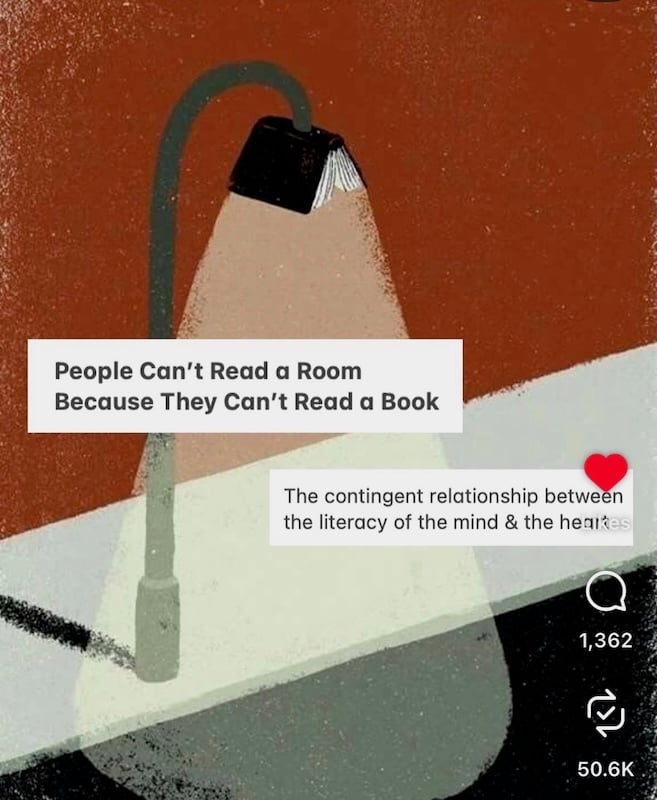
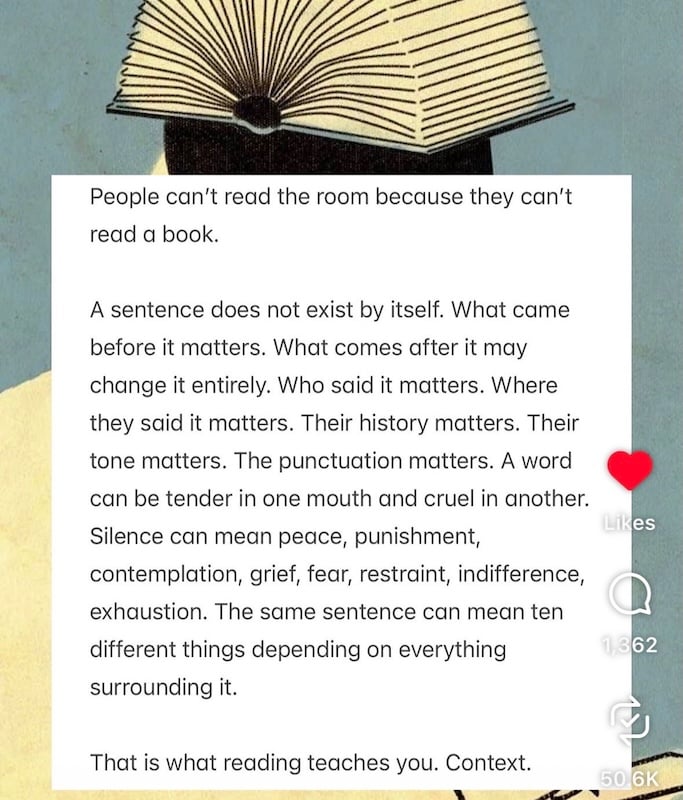
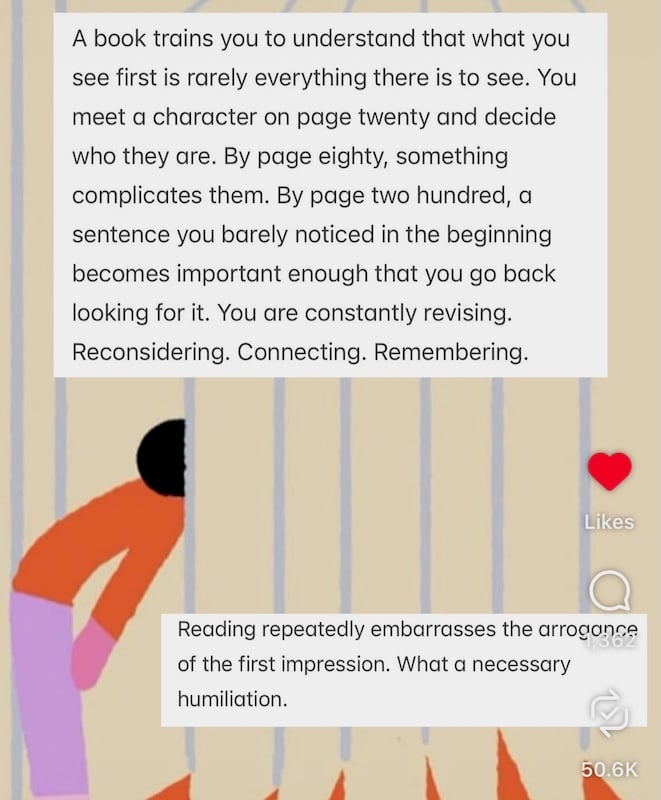
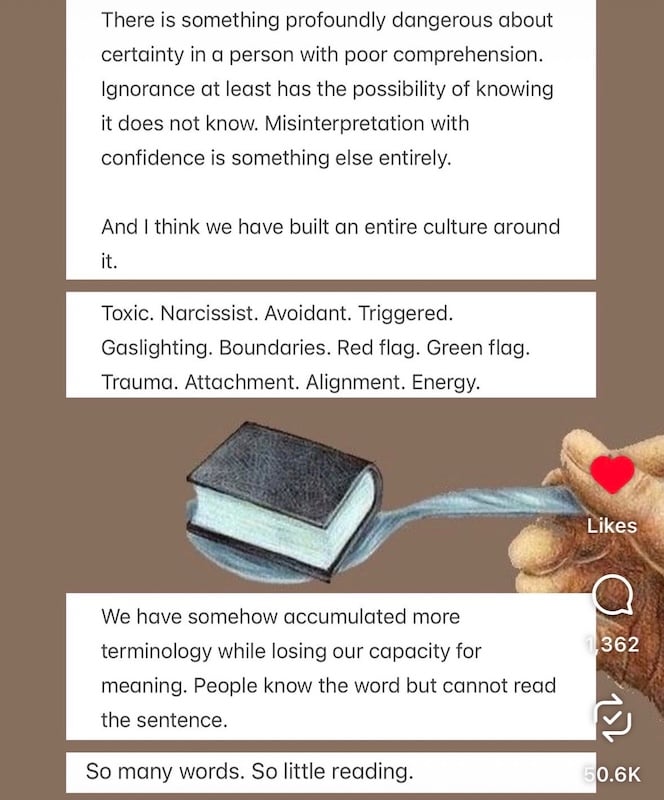
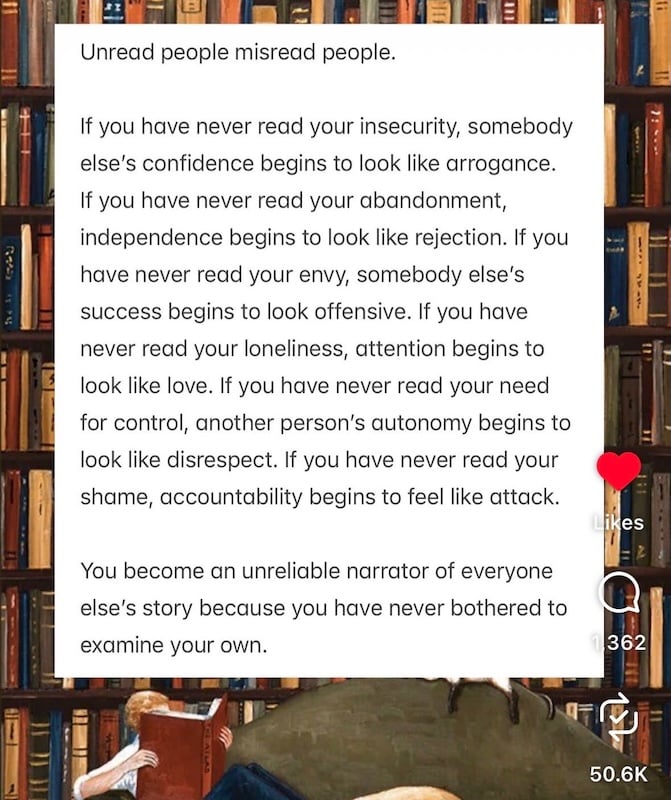
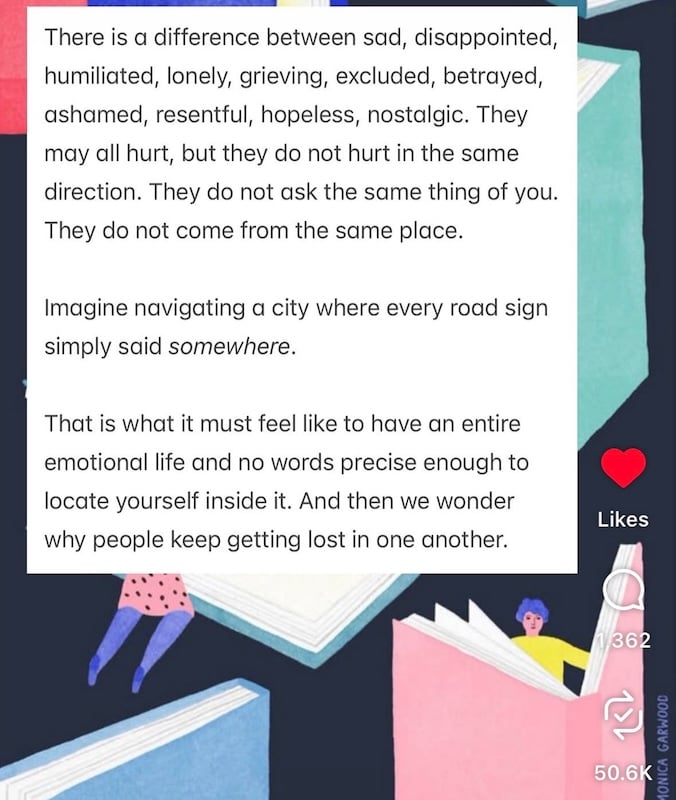
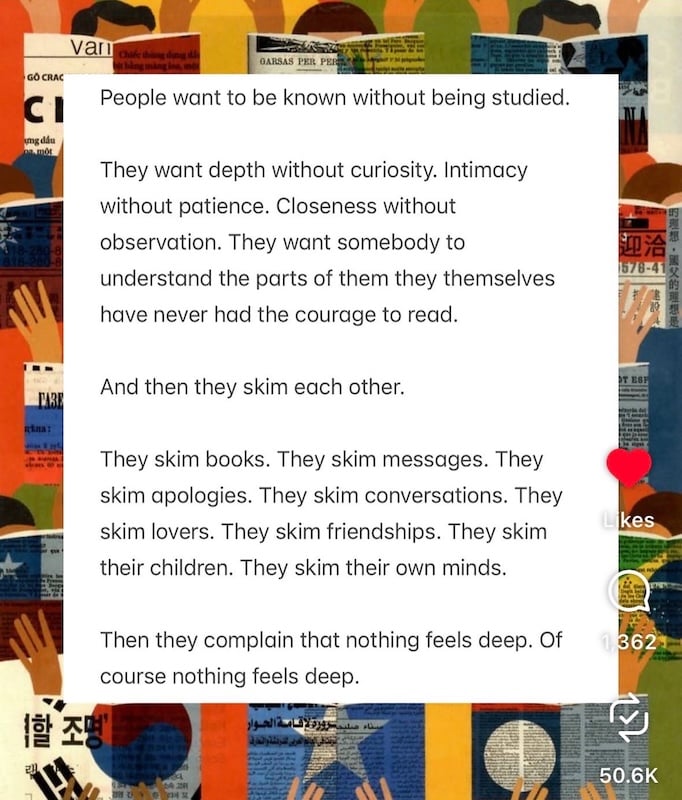
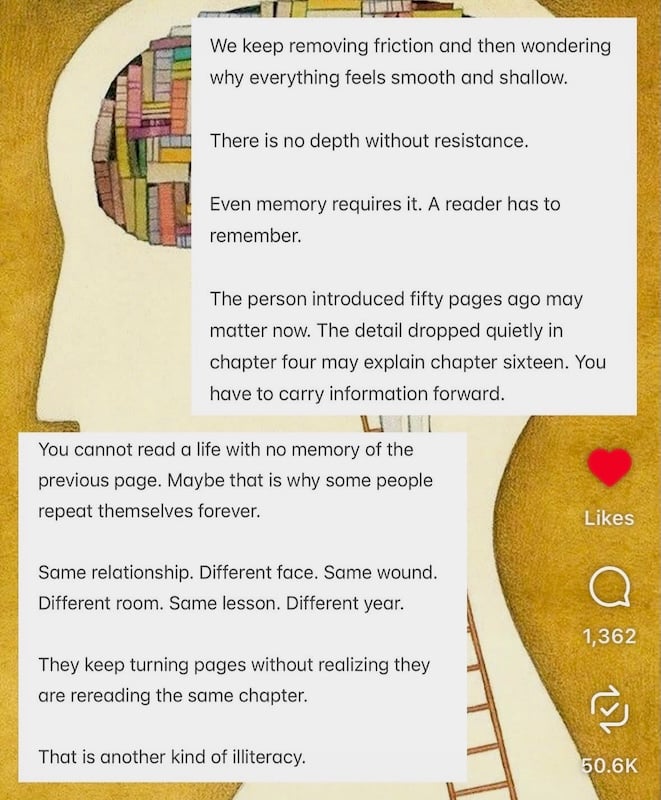
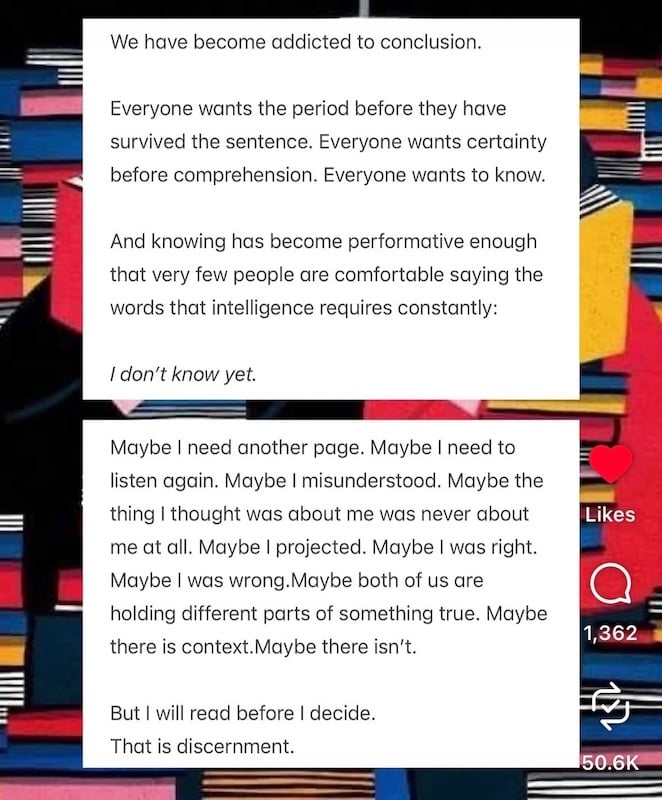
She titled the post, “People Can’t Read a Room Because They Can’t Read a Book: The contingent relationship between the literacy of the mind & the heart”– and while nothing here is exactly revolutionary it is so well articulated that within reading five slides I found myself nodding along, swept away in the compelling succinctness of it all.
There’s a lot to chew on and parse out in the below collection of slides, but I wanted to share Aya B’s post in full as I think anyone invested in Western culture should give it a read.
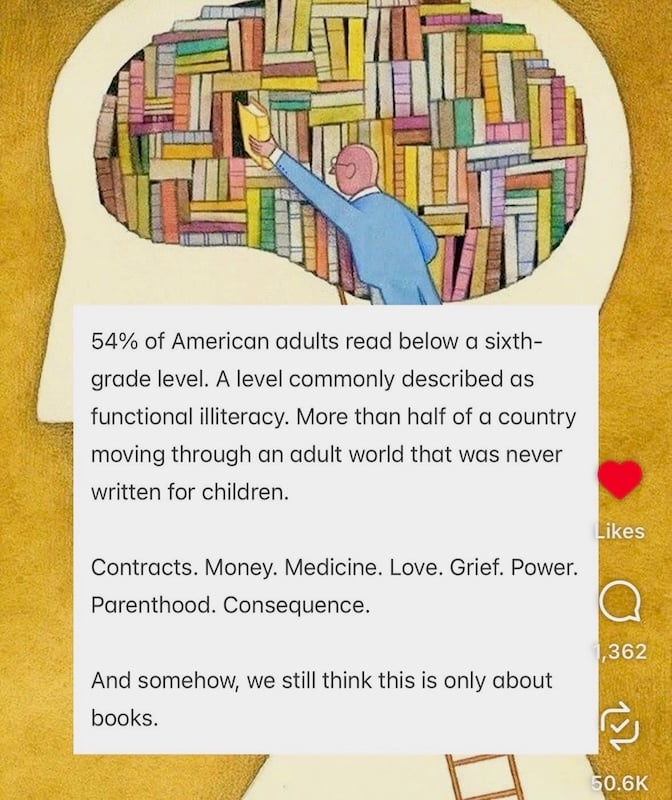
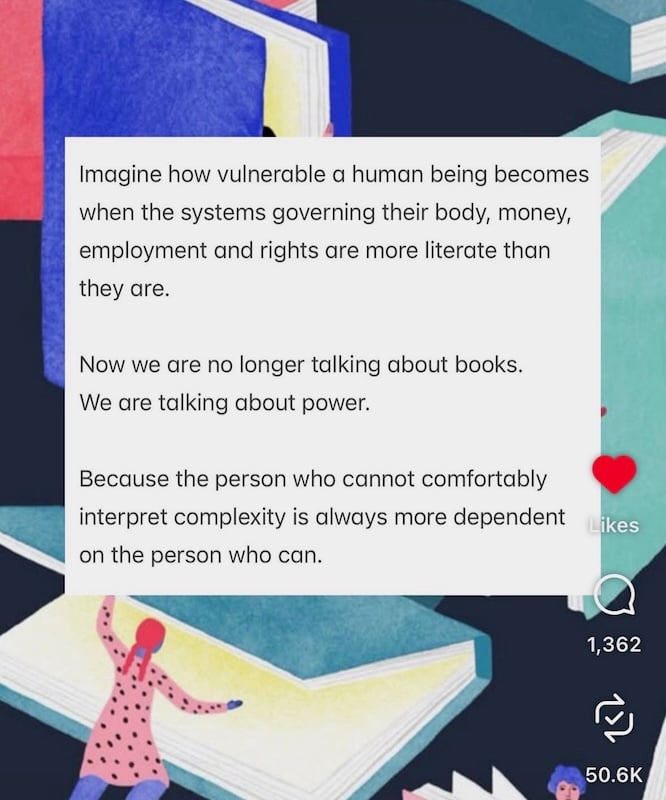
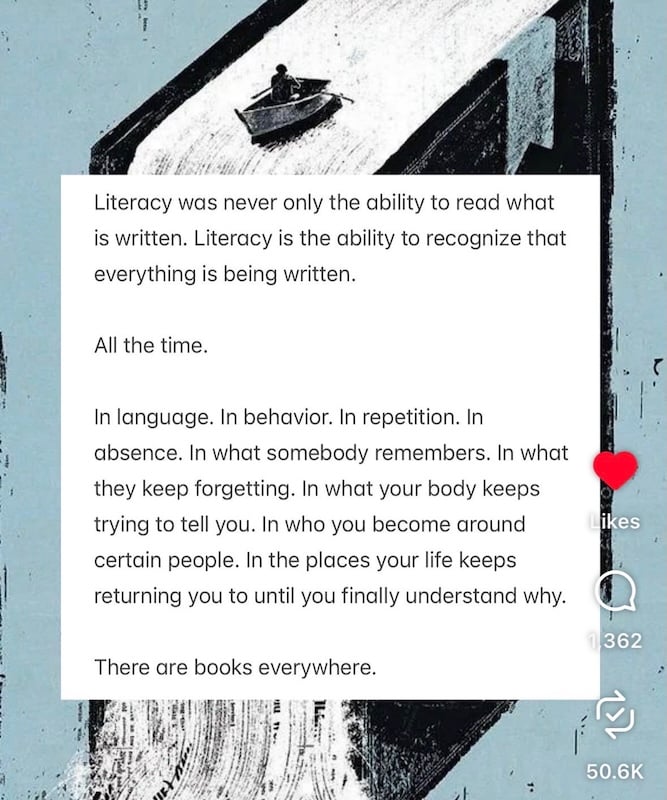
Reading– and more generally the literacy crisis– isn’t so much about literacy as it is a parable of the human experience, as a decline in literacy represents a widening gap in the human ability to determine what we value, and how we interpret meaning and connection in our lives. Reading is tool to help us understand the inevitable friction of life, its great joys and deep lows, and how we might navigate them all with grace, humility, resilience, self-efficacy, and joy. As the writer so eloquently states: “We keep discussing literacy as if it is an educational issue. It is a human issue.” And, later: “Unread people misread people.”
Below are the complete words written by the aforementioned AyaConnects, who struck a chord with her post about the deeper, more esoteric consequences of a culture where literacy lags. The post went viral (exceeding 12 million + views within a few days of posting), and it’s worth reading in full– which is why we’ve reposted the whole essay here via AyaConnects’ Instagram page.
Check it out, below:
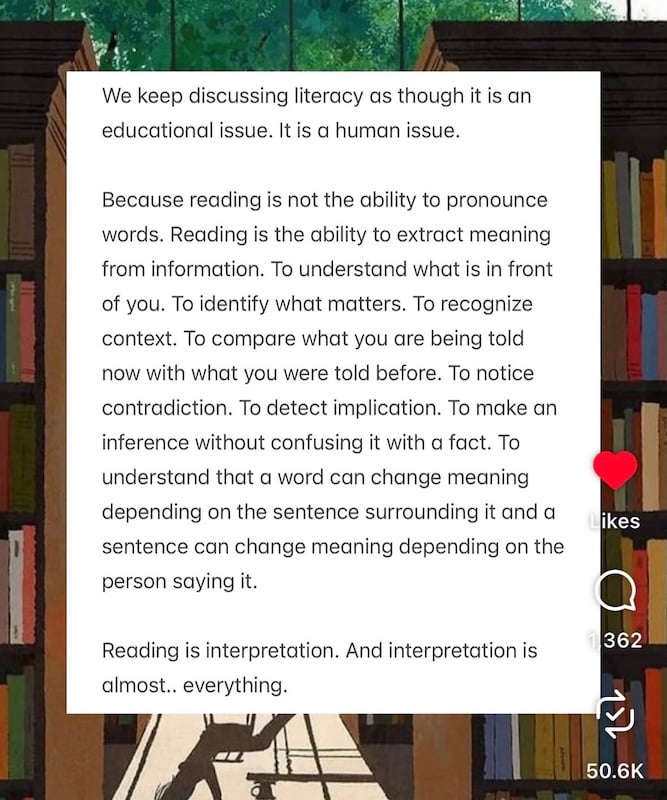
When I finished reading these words, I couldn’t help but feel the momentum of their conviction urging me to carry this idea forth into my day. This is a salient and cogent reminder that so many cultural issues– like the literacy crisis– are really just human issues– and they’re tender and deeply philosophical, but worth figuring out.
Better still, we don’t necessarily need to fear the literacy crisis, either– we should feel good about our individual and collective capacity to think so critically about social issues that might otherwise seem siloed from everyday life. Holding this concern is an intellectual privilege, really. And that’s good, because it means we are mounting the agency and awareness to more adequately address it.
For now, if you feel inspired, you can simply read something enjoyable today. There is nothing to do, other than self-reflect. Being mindful about even the simplest use of your time, like reading, is a beautiful exercise in humanity. And that is, ultimately, what this is all about.
***
Related: 12 Things That Are Better Predictors of Happiness Than Money, “Success”, or Accolades.
Leave a Reply